Austria's Football Seasons Drive Shifts in Live Betting Strategies and Platform Features
Zara Schwarz · Oct 17, 2026
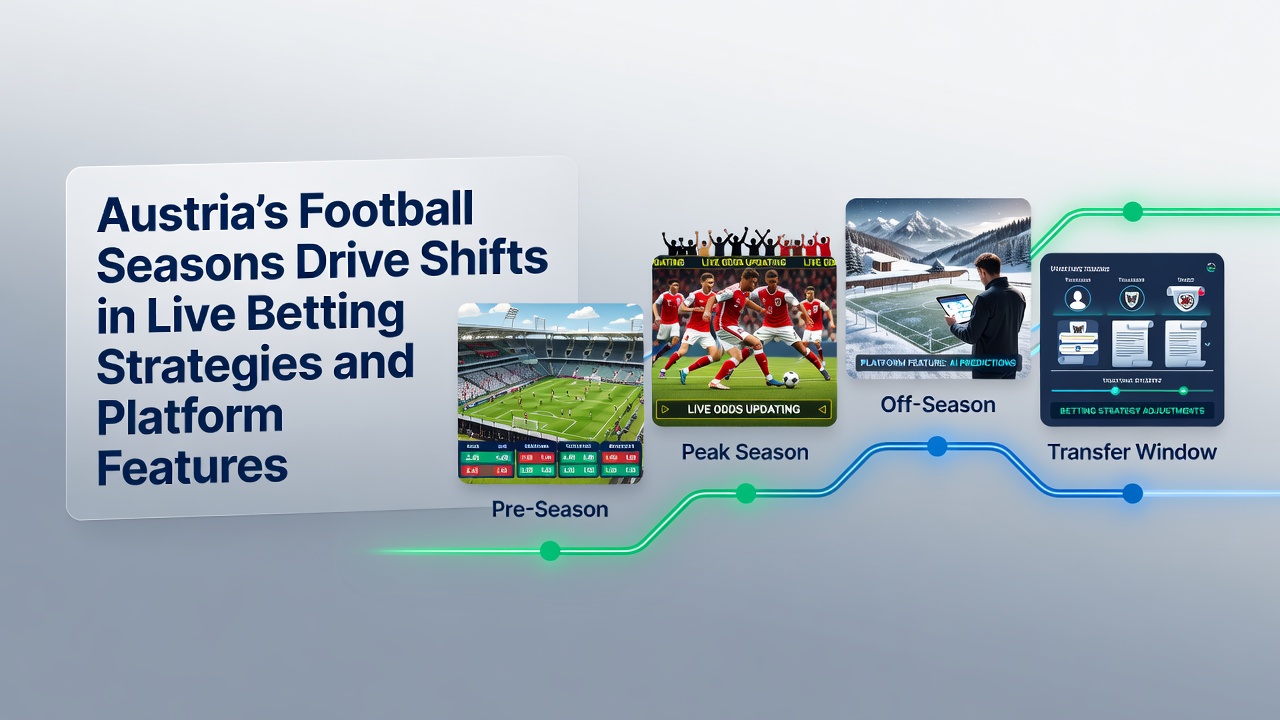
Austria's Football Seasons Drive Shifts in Live Betting Strategies and Platform Features
Austria's football calendar runs from late July through May each year, and that rhythm directly shapes how live betting unfolds on licensed platforms. The Austrian Bundesliga and its second division schedule roughly 240 matches across the regular season, with additional cup fixtures creating concentrated periods of activity that operators track closely. Data from the Austrian Federal Ministry of Finance shows betting volumes rise sharply once the league resumes after the winter pause, while pre-season friendlies and early rounds produce more measured wagering patterns.
Seasonal Patterns in Match Volume and Wagering Focus
Early August fixtures tend to feature teams still integrating new signings, which leads platforms to expand markets around substitutions and first-half totals rather than outright winners. By October the schedule intensifies, and October 2026 will place clubs in the middle of their campaign when fatigue and fixture congestion become measurable variables. Live bettors during those weeks often shift attention toward cards, corners, and player-specific props because historical figures reveal higher incidence rates once teams have played eight to ten matches. Operators respond by refreshing those markets every thirty seconds instead of the ninety-second intervals used in August.
Winter breaks create an abrupt drop in domestic options, so platforms temporarily emphasize international qualifiers and youth tournaments to maintain engagement. When the league restarts in February, the emphasis moves to over/under goals in the final twenty minutes because defensive lines tend to tire faster after the rest period. Observers note that cash-out functionality sees greater use in these later stages, allowing users to lock in partial returns before stoppage time.
Platform Adjustments to Live Odds and Data Feeds
Live betting interfaces update their statistical overlays in line with the season's progression. During peak months platforms add granular pitch maps and expected-goals models that draw from the same tracking systems used by clubs, because those datasets become more reliable once teams have established consistent lineups. In contrast, August interfaces rely more heavily on historical averages since current-season samples remain small. Several operators have introduced season-specific filters that let users toggle between early-season, mid-season, and end-of-season data sets when placing in-play wagers.

Payment processing times also align with volume spikes. Figures from the European Commission’s gambling sector reports indicate that transaction queues lengthen during October and March, prompting some platforms to prioritize instant withdrawal options for verified accounts during those windows. The same reports note that responsible gambling tools, such as session reminders, appear more frequently on screens when match density increases.
Regulatory Context and Feature Rollouts
Austria’s licensing framework requires operators to demonstrate that new live features undergo testing before deployment. When the league calendar shifts, platforms submit updated risk assessments that cover the additional markets they intend to offer. These submissions often reference injury reports and travel schedules published by the Austrian Football Association, which become more detailed as the season advances. As a result, the number of available player-performance bets grows from roughly 25 per match in August to more than 60 by April.
Studies published by the Responsible Gambling Council in Canada highlight that users adapt their staking patterns when platforms introduce new live visuals, and Austrian operators have incorporated similar visual cues timed to domestic fixture congestion. This approach keeps the interface consistent while matching the natural rhythm of the Austrian season rather than imposing uniform features year-round.
Conclusion
The Austrian football season supplies a predictable yet evolving structure that licensed betting platforms use to calibrate both strategy options and technical capabilities. From the cautious markets of early August through the dense October schedule and into the spring run-in, operators adjust refresh rates, statistical depth, and responsible tools to match documented patterns in match data and user activity. These adjustments remain anchored in licensing requirements and performance metrics supplied by league and regulatory sources, producing a live betting environment that tracks the calendar rather than overriding it.