Charting Approved Financial Routes for Participants in Austria's Controlled Betting Landscape
Frankie Klein · Aug 24, 2026
Charting Approved Financial Routes for Participants in Austria's Controlled Betting Landscape
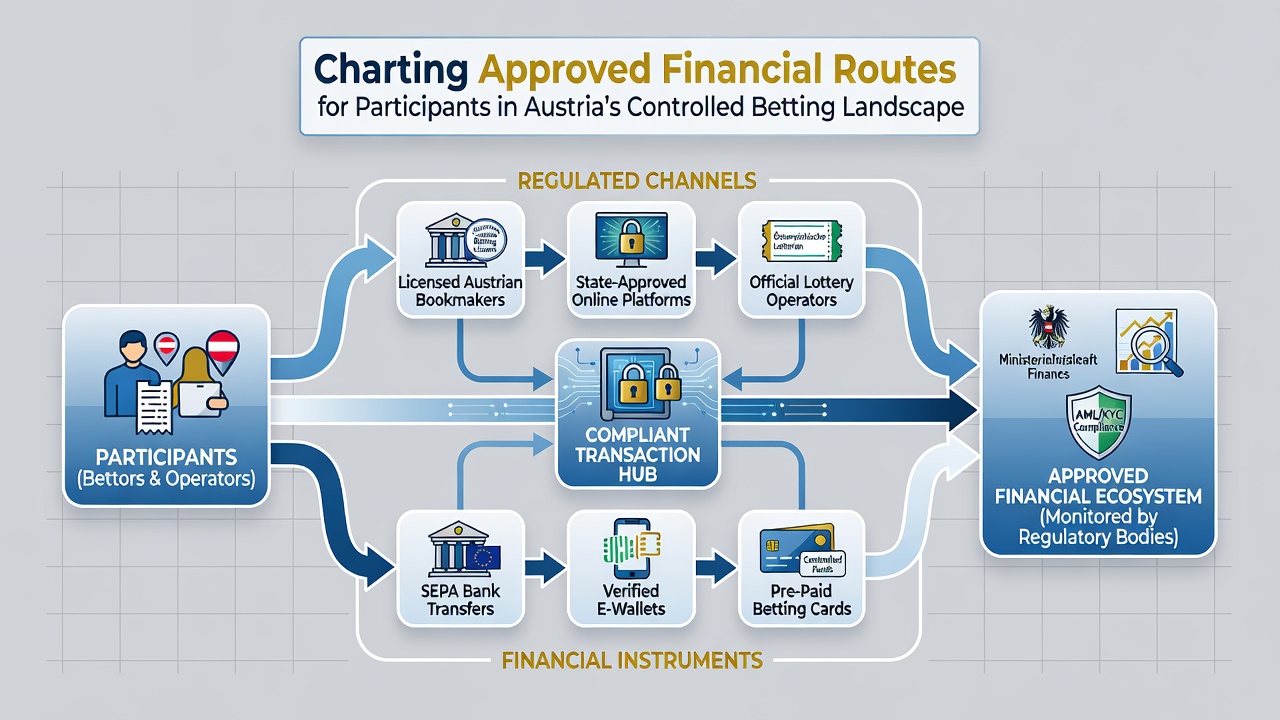
Participants in Austria's controlled betting landscape navigate a structured system of licensed operators and compliant financial channels that prioritize security alongside regulatory adherence. Austrian law channels all betting activity through entities approved under the Glücksspielgesetz, which means every deposit and withdrawal must flow through mechanisms that satisfy anti-money laundering checks plus identity verification protocols.
Regulatory Framework Governing Transactions
Observers note that the Austrian Federal Ministry of Finance oversees licensing and enforces strict rules on how funds enter and exit betting accounts. As of August 2026 new digital reporting requirements will take effect, requiring operators to integrate real-time transaction monitoring systems that flag patterns exceeding set thresholds. These measures build on existing EU directives that Austria has transposed into national statutes, creating a uniform approach across licensed platforms.
Research from the European Commission shows consistent application of payment service directives that limit acceptable instruments to those issued by supervised financial entities. Bank transfers via SEPA remain the most widely used route because they provide clear audit trails and integrate directly with domestic banking infrastructure. Credit and debit cards from authorized issuers also function when they meet additional verification layers imposed by the operator.
Primary Approved Deposit Channels
SEPA bank transfers dominate daily activity because they support both euro-denominated accounts and instant confirmation once the sending bank clears the instruction. E-wallets that hold licenses within the European Economic Area appear on approved lists provided they complete full customer due diligence before linking to a betting profile. Prepaid vouchers issued by Austrian financial institutions offer another controlled pathway that avoids direct card exposure while still recording every movement for compliance records.
Those who have examined operator portals find that instant card deposits often require an additional security step such as 3D Secure authentication. This process ties the transaction to the cardholder's banking app or SMS confirmation, reducing fraud risk in line with standards set by the Austrian Banking Act. Digital payment providers must demonstrate equivalent safeguards before receiving inclusion on any licensed site's accepted methods list.
Withdrawal Procedures and Timelines
Withdrawals follow the same principle of traceability that governs deposits. Funds typically return through the original deposit channel unless regulatory exceptions apply, and processing periods range from one business day for e-wallet returns to five days for traditional bank transfers. Operators publish these schedules on their platforms so participants can plan accordingly without encountering unexpected delays.
Data compiled by the University of Sydney's gambling research unit indicates that jurisdictions with similar licensing models experience fewer disputes when withdrawal channels remain consistent with deposit origins. Austrian operators therefore encourage participants to maintain the same payment profile throughout their activity cycle. This practice simplifies reconciliation for both the user and the compliance team responsible for monthly regulatory filings.
Security Measures Embedded in Financial Routes
Encryption standards applied to every transaction mirror those required by the Payment Services Directive 2. Two-factor authentication appears at login and again at the point of fund movement, while continuous monitoring algorithms scan for anomalies such as rapid successive deposits from multiple sources. Licensed operators must retain transaction logs for a minimum period defined by national financial regulations, allowing authorities to conduct audits when required.
What's interesting is how these layered controls operate without interrupting the user experience for compliant activity. Participants who complete initial verification once usually experience streamlined subsequent interactions because their profile already satisfies ongoing due-diligence thresholds. The system therefore rewards consistent use of verified channels while restricting access to unapproved alternatives.
Conclusion
Austria's controlled betting landscape maintains clear boundaries around acceptable financial routes by combining national statutes with European payment standards. Participants who select SEPA transfers, approved e-wallets, or verified cards operate within established compliance frameworks that will incorporate enhanced digital reporting from August 2026 onward. Observers tracking these developments see continued emphasis on traceability and security that supports both regulatory oversight and participant protection across the licensed market.