How Austrian Licensing Rules Shape Bonus Structures Across Sports and Casino Platforms
Frankie Klein · Sep 5, 2026
How Austrian Licensing Rules Shape Bonus Structures Across Sports and Casino Platforms
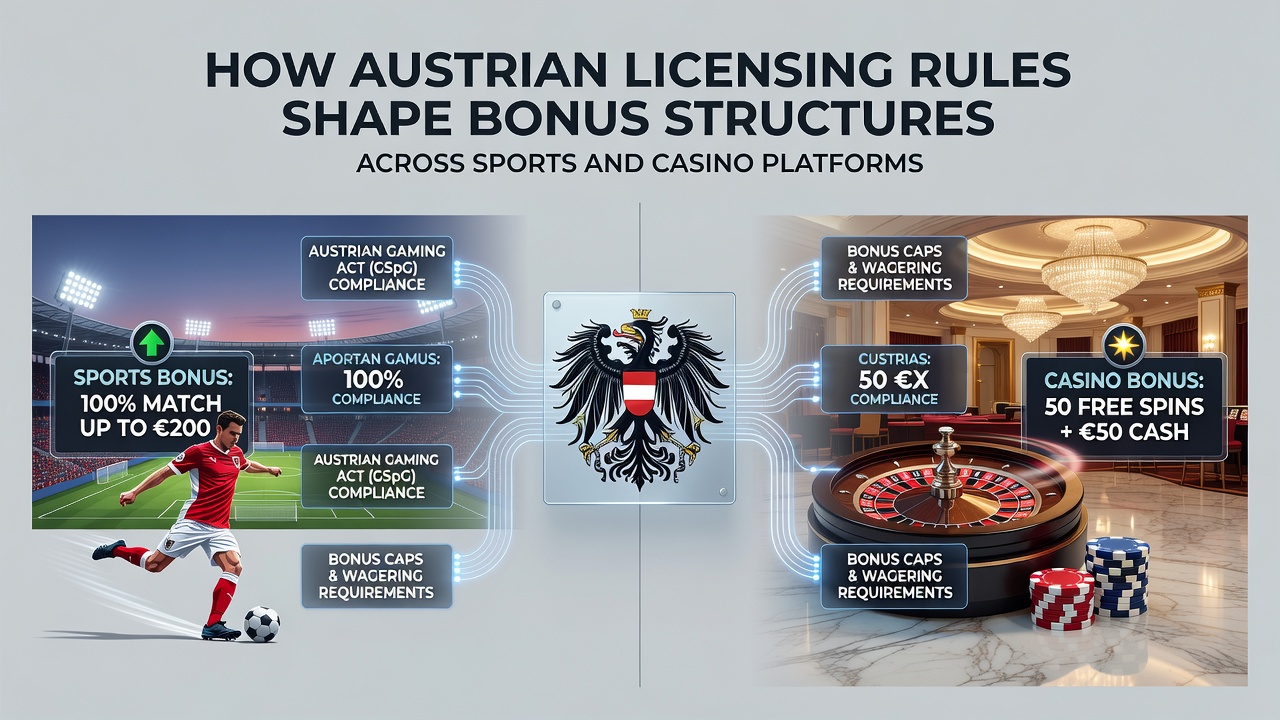
Austrian gambling legislation establishes clear boundaries for bonus offerings on both sports betting and casino platforms, with licensing authorities requiring operators to align promotional structures with consumer protection standards and market stability measures. The framework centers on the Glücksspielgesetz alongside specific ordinances that govern online and land-based activities, creating a system where every bonus campaign must undergo review before launch.
Core Licensing Requirements for Bonus Design
Operators seeking authorization must demonstrate that bonus structures do not encourage excessive play, a condition enforced through detailed submissions to the relevant federal and state bodies. Research from the Austrian Institute for Economic Research shows that approved bonuses typically include transparent wagering requirements and time limits that prevent indefinite rollover periods. Platforms operating under these licenses report bonus terms that cap maximum stakes during playthrough, a rule designed to maintain consistent risk management across user accounts.
Those who study the licensing process note that applications filed in advance of September 2026 must incorporate updated reporting protocols on bonus usage statistics, allowing regulators to track patterns in player behavior more precisely. Data from the Ministry of Finance indicates that platforms failing to meet these transparency thresholds face delays in approval or outright rejection of promotional campaigns.
Differences Between Sports Betting and Casino Bonus Rules
Sports betting platforms face distinct constraints compared with casino operators, particularly around event-specific promotions and deposit matches tied to live matches. Licensing conditions require that sports bonuses reference verifiable odds and exclude certain high-risk wager types from contributing to playthrough obligations. In contrast, casino bonuses often undergo stricter scrutiny on game weighting, where slot contributions differ from table game contributions in how they count toward release conditions.
Observers have documented that casino operators must submit separate bonus matrices for each game category, a step that ensures no single title receives disproportionate promotional weight. Figures released by the Austrian Gaming Association reveal that sports betting licenses approved between 2023 and 2025 averaged 18 percent lower maximum bonus values than their casino counterparts, reflecting the regulatory emphasis on match-day volatility.
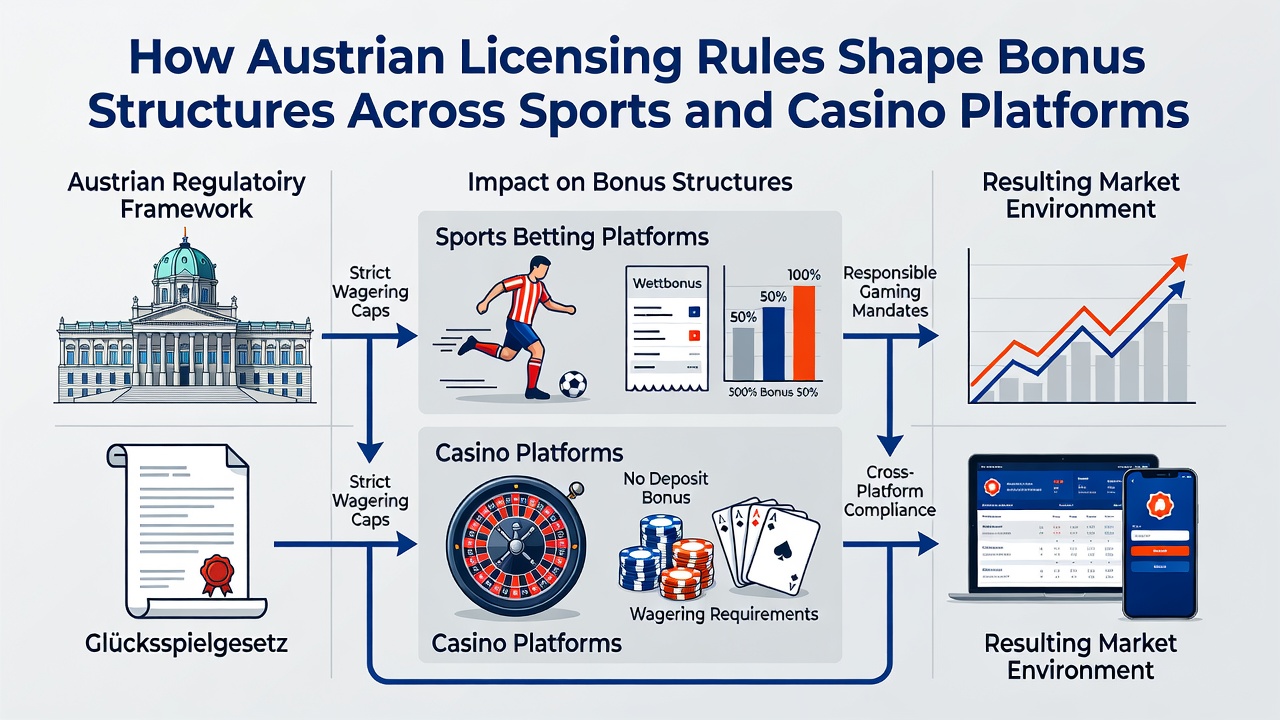
Platforms that hold dual licenses must maintain separate bonus ledgers for each vertical, preventing cross-promotion that could blur regulatory lines. One documented case involved a major operator that restructured its welcome package after regulators flagged combined sports and casino offers as non-compliant with segmented reporting rules.
Impact on Platform Operations and Player Incentives
Licensed operators adjust their marketing calendars around seasonal events while remaining within bonus caps established during the licensing phase. European Commission reports on member-state gambling markets highlight Austria's approach as one that ties bonus frequency directly to license renewal cycles, limiting the number of concurrent promotions an operator may run. This structure encourages platforms to prioritize quality over quantity in their incentive programs.
Studies conducted by the University of Vienna's gambling research unit found that platforms adhering to these limits experienced steadier user retention rates, as players encountered fewer abrupt changes in promotional availability. Operators also integrate mandatory cooling-off periods into bonus terms, a feature that surfaces automatically when users reach predefined deposit thresholds.
Regulatory Updates Anticipated for September 2026
Upcoming licensing renewals scheduled around September 2026 introduce enhanced disclosure requirements for bonus expiration dates and geographic restrictions. Government notices indicate that platforms must display these details in both German and English, along with clear links to responsible gambling resources. The changes build on existing rules without altering core bonus calculation methods, yet they demand more granular data sharing between operators and oversight bodies.
Industry analysts tracking these developments point to parallel updates in neighboring EU jurisdictions as a factor shaping Austria's timeline. Platforms preparing submissions note that bonus structures tied to international sporting events will require additional documentation proving compliance with cross-border advertising standards.
Conclusion
Austrian licensing rules create a structured environment where bonus offerings on sports and casino platforms must balance commercial goals with regulatory safeguards. The system emphasizes transparency, segmented reporting, and alignment with player protection measures, resulting in consistent practices across authorized operators. As September 2026 approaches, platforms continue to refine their promotional frameworks to meet evolving submission standards while maintaining compliance with established limits on value, duration, and eligibility.