Regional Demographic Trends Shaping Casino Variant Popularity Across Austrian Provinces
Zara Roth · Oct 31, 2026
Regional Demographic Trends Shaping Casino Variant Popularity Across Austrian Provinces
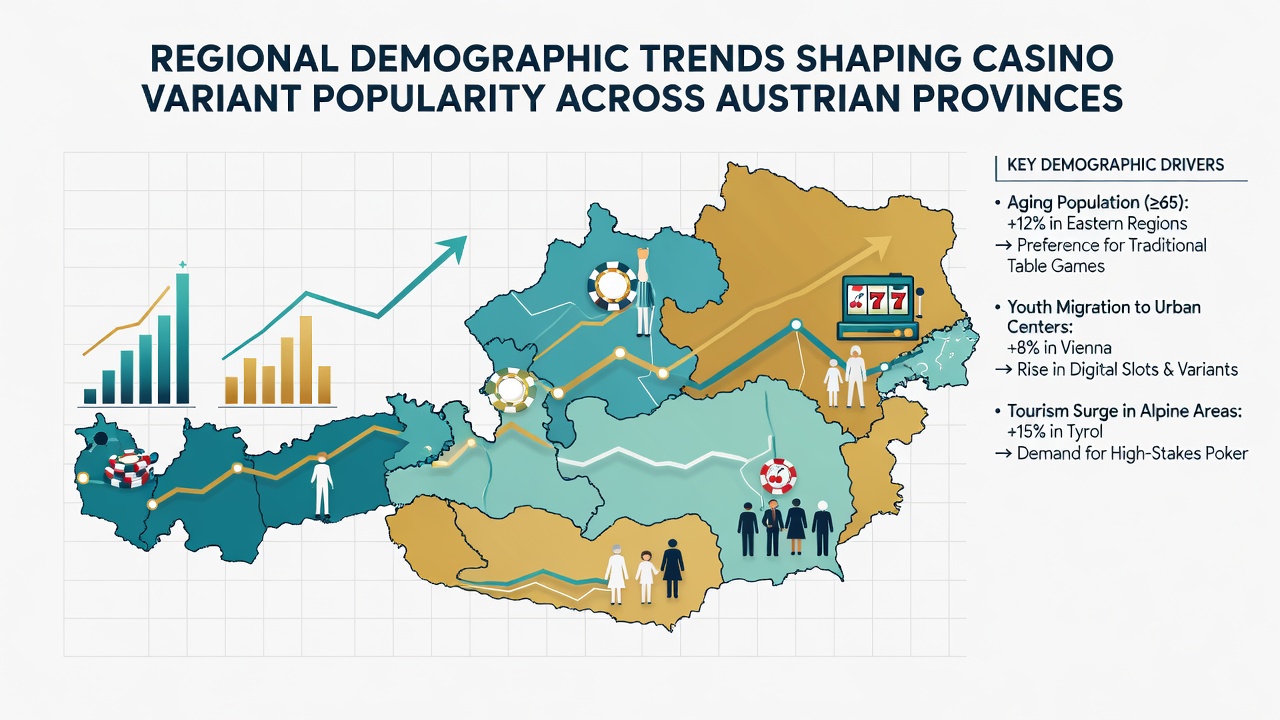
Population shifts across Austria continue to influence which casino variants draw the most interest in each province, and researchers tracking these patterns note clear connections between age distributions, urban density, and tourism flows. Data from recent census updates show that provinces with higher concentrations of younger residents see stronger engagement with digital slots and live dealer formats, while areas dominated by older demographics maintain steady participation in traditional table games like roulette and blackjack.
Urban Centers Drive Shifts Toward Interactive Variants
Vienna and other densely populated regions exhibit distinct preferences shaped by younger working populations and higher smartphone penetration rates, and experts from the Austrian Institute for Economic Research point out that these groups favor variants offering quick sessions and social features. Lower Austria and Upper Austria, with their mix of suburban growth and commuting patterns, display similar leanings toward online-enabled casino options that integrate with mobile platforms, whereas rural pockets within the same provinces show slower adoption of these formats. According to figures from Eurostat, the median age in Vienna stands notably lower than the national average, a factor that correlates with elevated interest in progressive jackpot slots and multi-player poker rooms.
Tourism and Seasonal Influences in Alpine Provinces
Tyrol and Salzburg experience pronounced seasonal population swells from international visitors, and these influxes temporarily boost demand for high-stakes table games and roulette wheels in land-based venues. Observers note that during peak winter months the transient demographic tilts toward affluent travelers who prefer established European casino classics over newer digital hybrids. By contrast, Styria and Carinthia maintain more consistent local participation patterns, with residents showing balanced interest across both physical and virtual variants. Projections prepared ahead of October 2026 anticipate continued growth in short-term visitor numbers for these regions, which in turn sustains the appeal of variants that accommodate group play and variable betting limits.
Income Levels and Variant Accessibility Patterns
Household income data reveal additional layers of influence, since provinces with above-average earnings such as Vorarlberg demonstrate stronger uptake of premium variants including private poker tables and exclusive slot tournaments. Those who've analyzed spending records from regional operators find that middle-income groups across Burgenland and parts of Lower Austria gravitate toward lower-stakes electronic gaming machines that offer extended play sessions. Research compiled by the OECD indicates stable correlations between disposable income brackets and preferred game volatility levels, with higher earners selecting lower-volatility options that emphasize skill elements like blackjack strategy.
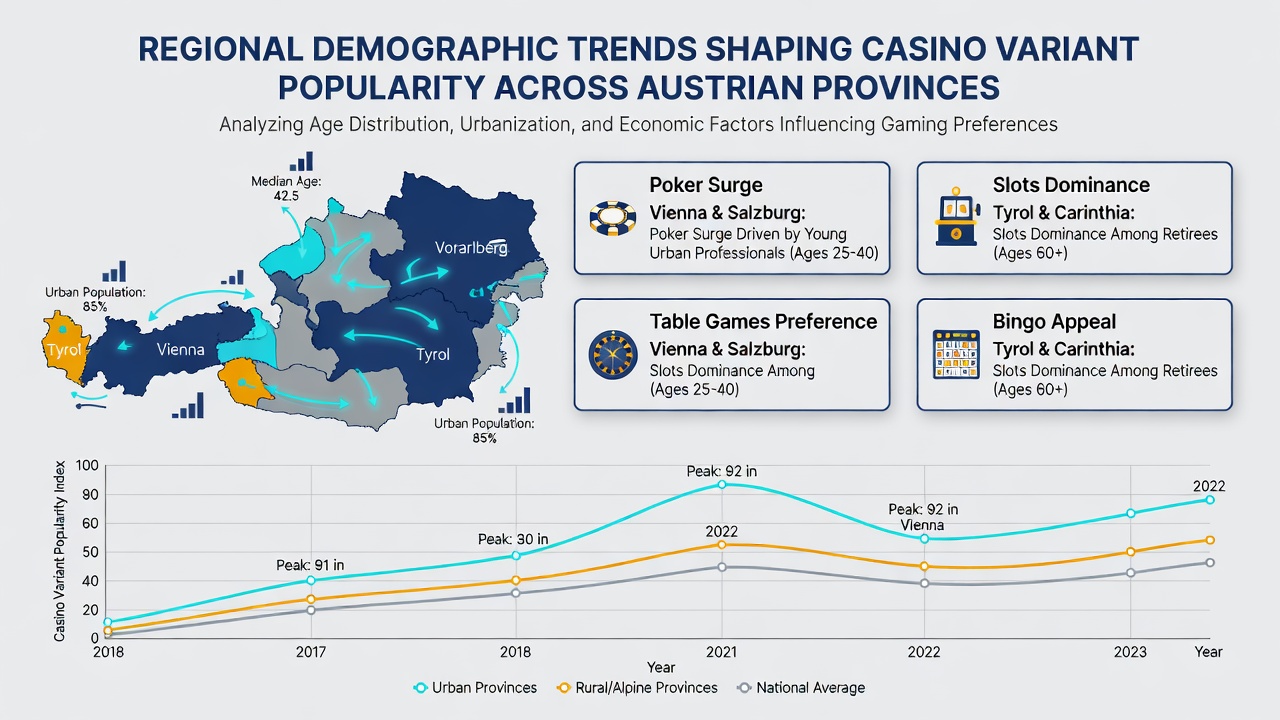
Gender distributions also factor into these regional differences, and studies tracking participation rates indicate that provinces with more balanced male-female ratios see broader interest in mixed-gender tournaments and social casino experiences. Carinthia and Salzburg, for instance, report steady female engagement with bingo-style and themed slot variants, while male-dominated participant groups in industrial zones lean toward sports-integrated casino hybrids.
Projections and Ongoing Adjustments Through 2026
Population forecasts extending into October 2026 suggest continued urbanization trends that will likely amplify preferences for mobile-accessible variants in Vienna and surrounding commuter belts, and analysts from regional planning offices expect corresponding adjustments in venue offerings. Meanwhile, rural provinces such as Burgenland may see gradual aging of their resident base, a development that historically correlates with sustained loyalty to classic card and wheel games. Cross-border movement from neighboring countries adds another variable, since temporary residents from Germany and Italy often introduce preferences for variants popular in their home markets, including certain electronic roulette configurations.
Statistical agencies continue to compile province-level participation metrics that highlight these demographic drivers, and the resulting datasets help operators align variant portfolios with local realities. One study released by the University of Innsbruck examined how educational attainment levels intersect with game complexity preferences, revealing higher interest in strategy-heavy options among university-educated cohorts concentrated in Salzburg and Tyrol. Such findings underscore the interplay between education, age, and regional economic profiles without suggesting uniform outcomes across all Austrian territories.
Conclusion
Demographic compositions across Austria's nine provinces shape casino variant popularity through measurable factors including age structures, income distributions, tourism patterns, and educational profiles, and ongoing data collection supports targeted adaptations by operators. These trends remain dynamic as population movements continue, with particular attention directed toward developments projected through late 2026.